


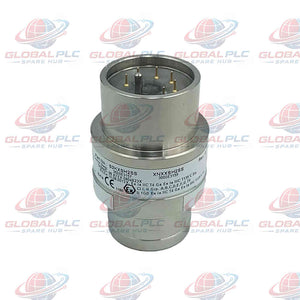
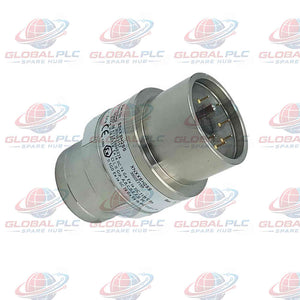

XNXXSH2SS Honeywell Hydrogen Sulfide Sensor 50–500 ppm Detection
Manufacturer: Honeywell
Product No.: XNXXSH2SS
Condition: In stock
Product Type: Hydrogen Sulfide Sensor
Product Origin: USA
Payment: T/T, Western Union
Weight: 500g
Shipping port: Xiamen
Warranty: 12 months
Estimate delivery times: 12-26 days (International), 3-6 days (United States).
Return within 30 days of purchase. Duties & taxes are non-refundable.
Guaranteed Safe Checkout
Honeywell XNXXSH2SS Hydrogen Sulfide Sensor for Industrial Gas Monitoring
The Honeywell XNXXSH2SS is an Analytics hydrogen sulfide (H₂S) sensor designed for gas-monitoring applications that require detection of H₂S concentrations across a configurable measurement range. It offers selectable full-scale ranges from 50 to 500 ppm, a default range of 100 ppm, and a stated lower detectable limit of 1 ppm.
For maintenance and instrumentation engineers, the key selection factors are the required detection range, calibration gas concentration, response time, operating temperature, and compatibility with the installed gas detection system. The XNXXSH2SS specifies a T50 response time below 20 seconds and a T90 response time below 30 seconds, supporting evaluation of its response characteristics within the intended monitoring application.
This component should be selected against the detector manufacturer's compatibility requirements. Confirm the supported detector model, sensor interface, calibration procedure, and alarm configuration before ordering or replacing an installed sensor.
01 | Measurement Profile
| Parameter | Specification |
|---|---|
| Manufacturer | Honeywell |
| Product family | Honeywell Analytics |
| Model / Product number | XNXXSH2SS |
| Product type | Hydrogen sulfide (H₂S) sensor |
| Target gas | H₂S — hydrogen sulfide |
| Gas range designation | H₂S (Hi), as supplied in the product specification |
| Selectable full-scale range | 50–500 ppm |
| Default full-scale range | 100 ppm |
| Lower detectable limit | 1 ppm |
| Full-scale selection increment | 10 ppm |
| Selectable calibration gas range | 30–70% of the selected full-scale range |
| Default calibration point | 50 ppm |
| T50 response time | <20 seconds |
| T90 response time | <30 seconds |
| Accuracy | <±5 ppm, as specified in the supplied data |
| Operating temperature | −40°C to +55°C (−40°F to +131°F) |
02 | Range Selection and Calibration Logic
The configurable measurement range allows the sensor to be matched to the expected H₂S concentration and the requirements of the connected detection system. The correct setting depends on the measurement objective, alarm thresholds, detector configuration, and applicable site procedures.
| Selection item | Engineering consideration |
|---|---|
| 50–500 ppm full-scale range | Choose a range supported by the installed detector and appropriate for the expected concentration profile. |
| 100 ppm default range | Confirm whether the default setting matches the intended application before commissioning. |
| 10 ppm selection steps | Use the available increments when configuring the supported full-scale setting. |
| 1 ppm lower detectable limit | This is the stated lower detection limit; it should not be treated as a guarantee of accuracy at every concentration. |
| 30–70% calibration gas range | Select a certified calibration gas concentration within the supported range for the configured full scale. |
| 50 ppm default calibration point | Verify that the calibration point is suitable for the selected range and the detector's calibration procedure. |
Calibration example: If the configured full-scale range is 100 ppm, the stated 30–70% calibration gas range corresponds to 30–70 ppm. The default calibration point of 50 ppm falls within that interval. For other full-scale settings, calculate the permitted calibration gas concentration from the selected range and verify it against the manufacturer's instructions.
Do not assume that changing the sensor's full-scale range automatically changes the detector's alarm setpoints, output scaling, or control-system logic. Review these settings separately during commissioning.
03 | Response Characteristics and Measurement Interpretation
The stated T50 and T90 values describe the time required for the indicated response to reach specified portions of a concentration change under the manufacturer's test conditions. They help engineers evaluate the sensor's response behavior when assessing gas-monitoring performance.
- T50 below 20 seconds: The stated response reaches 50% of the defined response change in less than 20 seconds under the specified test conditions.
- T90 below 30 seconds: The stated response reaches 90% of the defined response change in less than 30 seconds under the specified test conditions.
- Accuracy below ±5 ppm: Interpret this specification within its stated test conditions and applicable manufacturer documentation. Do not assume that the same absolute accuracy applies uniformly across every selected range.
- Lower detectable limit of 1 ppm: This describes the stated lower detection limit, not the full measurement uncertainty or a guaranteed alarm activation point.
Actual gas detection performance also depends on the detector platform, calibration status, gas delivery conditions, installation location, environmental exposure, and maintenance condition. Use the complete detector's documented performance when evaluating system-level response.
04 | Integration with Gas Detection Equipment
The XNXXSH2SS is intended for use within a compatible Honeywell Analytics gas detection arrangement. The supplied specifications do not identify a complete list of supported detector models, electrical interface details, or output characteristics. Confirm these details before planning an installation or substitution.
- Fixed gas detection equipment: Consider the sensor for compatible fixed H₂S monitoring systems where the detector documentation identifies it as a supported component.
- Industrial process areas: Potential application areas include oil and gas facilities, chemical processing, wastewater operations, and other sites where H₂S monitoring is required, provided the complete detection system is approved and suitable for the installation.
- Equipment maintenance: Use the exact model reference when sourcing a replacement for an existing compatible installation.
- Plant monitoring and alarm systems: Confirm the connected detector's alarm logic, output behavior, and communication with the plant control system rather than assuming the sensor provides a direct PLC interface.
Application boundary: These examples describe potential uses of compatible H₂S detection equipment. They do not establish that the sensor alone provides a complete gas detection system, a safety instrumented function, or any specific hazardous-area approval.
05 | Field Diagnostics and Maintenance Checks
When a gas detector reports an abnormal reading, investigate the sensor, calibration, detector configuration, and environmental conditions before deciding that the sensing element has failed. Follow the site gas safety procedure and the manufacturer's approved maintenance instructions.
| Observed symptom | Possible causes to investigate | Recommended checks |
|---|---|---|
| Reading remains at zero during a functional test | Incorrect test gas, gas not reaching the sensor, expired calibration, incompatible sensor, or detector configuration issue | Verify the test gas identity and concentration, delivery method, sensor compatibility, and detector status. Follow the approved functional-test procedure. |
| Reading is lower than expected | Incorrect calibration, unsuitable test-gas concentration, restricted gas delivery, sensor degradation, or configuration mismatch | Check the calibration record, gas concentration, tubing and test accessories, and configured full-scale range. |
| Reading is unstable | Environmental interference, inconsistent gas delivery, poor connections, or a sensor nearing the end of its usable service condition | Review environmental conditions and test setup, inspect accessible connections according to the manual, and repeat the approved test. |
| Calibration does not complete successfully | Calibration gas outside the permitted range, incorrect calibration procedure, unsuitable accessories, or sensor incompatibility | Calculate the permitted calibration gas range from the selected full scale and verify the required procedure in the detector manual. |
| Detector response appears slow | Gas delivery delay, test setup issues, environmental conditions, or a sensor performance problem | Check the test arrangement and compare the observed response with the specified T50 and T90 values under comparable conditions. |
| Replacement sensor is not recognized or behaves unexpectedly | Incorrect part selection, unsupported detector model, installation issue, or configuration mismatch | Reconfirm the complete part number and detector compatibility. Inspect installation and configuration according to the approved procedure. |
Never use a suspected faulty sensor as the sole basis for declaring an area safe. Apply the site's approved backup monitoring, isolation, and maintenance procedures whenever gas detection performance is uncertain.
06 | Global PLC Spare HUB's Insight
For H₂S sensor selection, engineers should distinguish the lower detectable limit, configured full-scale range, measurement accuracy, and alarm setpoints. These values describe different aspects of performance and should not be treated as interchangeable. A low detection limit does not, by itself, establish the accuracy of a low-level reading or the response of the complete alarm system.
Before replacing an XNXXSH2SS, record the installed detector model, configured measurement range, calibration gas concentration, last calibration result, and any relevant fault indications. This information helps determine whether the problem relates to the sensor itself, the calibration setup, or the host detector.
For safety-critical applications, verify the complete detector's certifications, required proof or functional testing, alarm settings, and maintenance intervals against the manufacturer's documentation and the site's safety procedures. Do not infer system certification from the sensor model alone.
07 | Global PLC Spare HUB Review
The Honeywell Analytics XNXXSH2SS offers a configurable H₂S measurement range from 50 to 500 ppm, a stated 1 ppm lower detectable limit, and specified T50/T90 response times below 20 and 30 seconds, respectively. These characteristics provide useful starting points for evaluating its suitability for compatible gas detection equipment.
The most important purchasing check is system compatibility. The supplied data does not establish the full list of supported detector models, electrical interface specifications, or certification details for this exact part number. Buyers should verify these items before approving a replacement, especially where gas alarms form part of a site safety procedure.
8 | Warranty, Packaging, and Shipping
- Warranty: 12-month warranty, subject to the seller's applicable warranty terms and conditions.
- Shipping methods: FedEx, UPS, or DHL, subject to destination, service availability, and shipment requirements.
- Order verification: Provide the complete model number and the host detector model to support compatibility checks.
- Calibration planning: Confirm the required calibration gas, concentration, accessories, and procedure before putting the replacement into service.
Frequently Asked Questions
Q1: How do I determine whether the XNXXSH2SS is the correct replacement for my installed sensor?
Compare the full part number with the installed sensor label and the detector manufacturer's compatibility list. Also check the detector model, sensor interface, configured range, and required approvals. Similar gas type or range specifications alone do not prove interchangeability.
Q2: How should I select a calibration gas concentration for a different full-scale setting?
Use a calibration gas concentration within 30–70% of the selected full-scale range, according to the supplied specification. For example, a 200 ppm full-scale setting gives a nominal permitted calibration concentration range of 60–140 ppm. Confirm that the chosen gas and procedure are explicitly supported by the host detector's manual.
Q3: Does the 1 ppm lower detectable limit mean the sensor will always report exactly 1 ppm when that concentration is present?
No. A lower detectable limit is not the same as measurement accuracy, repeatability, or guaranteed alarm performance. Actual readings depend on the sensor, detector, calibration, test conditions, and applicable performance specifications. Use the manufacturer's documentation to assess low-concentration measurement requirements.
Q4: What information should maintenance teams record after calibration or sensor replacement?
Record the sensor part number, detector identification, configured full-scale range, calibration gas concentration and expiry, calibration result, date, technician, and any diagnostic messages. Retain functional-test results according to site procedures. These records help distinguish sensor deterioration from configuration or calibration problems during later troubleshooting.
Q5: What should I confirm before purchasing sensors for a multi-point H₂S detection system?
Confirm that every target detector supports the exact sensor, then review the required range, calibration process, environmental limits, approval requirements, and maintenance plan. Check the quantity and model references for each monitoring point. For safety-related installations, also verify the complete system's required performance and certification with the responsible engineer.
Request a Quote for Honeywell XNXXSH2SS
Need the Honeywell Analytics XNXXSH2SS H₂S Sensor for maintenance, replacement, or compatible gas detection equipment? Contact Global PLC Spare HUB with the part number and host detector model to request pricing and compatibility support.
Tags
Q: Are these parts 100% original and new?
A: Yes. Every component is guaranteed to be 100% original, brand-new, and factory-sealed. We also provide a 12-month comprehensive warranty for your peace of mind.
Q: How fast is the shipping to my country?
A: For in-stock items, we offer same-day dispatch. International express shipping (DHL/FedEx/UPS) typically delivers within 3–5 business days worldwide.
Q: Can I get a formal quotation with shipping costs?
A: Absolutely. Our sales team is ready to provide a detailed Proforma Invoice (PI) including the most competitive shipping rates for your location.
Q: Do you offer discounts for bulk orders?
A: We provide volume-based pricing for large projects or multiple-item orders. Please contact us to get our Best Price Guarantee.
12-Month Comprehensive Warranty
Every part supplied by Global PLC Spare Hub is covered by a 12-month warranty from the date of invoice.
- Coverage: Functional defects and hardware failures under normal operating conditions.
- Commitment: We provide immediate repair, replacement, or a full refund for any verified defective components to minimize your operational downtime.
Returns & Exchange Policy
We offer a 30-day return policy to ensure you receive the exact part your system requires.
- Eligibility: Returns are accepted for uninstalled items in their original, factory-sealed packaging.
- RMA Process: Please contact our support team to obtain a Return Merchandise Authorization (RMA) number before shipping.
- Fast Processing: Refunds or exchanges are processed within 3–5 business days after the returned item passes our technical inspection.
Need Technical Assistance?Not sure if this part is compatible with your system? [Consult our Engineers] before purchasing to ensure 100% compatibility.
People Also Bought


