


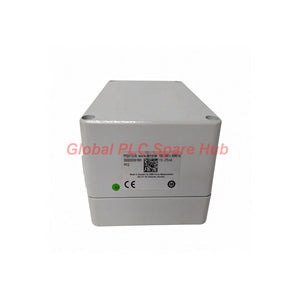
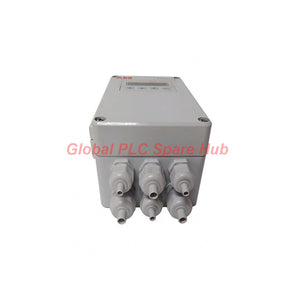

PFEA112-65 ABB Pressductor PROFIBUS-DP Tension Control Unit
Manufacturer: ABB
Product No.: PFEA112-65
Condition: In stock
Product Type: Pressductor
Product Origin: SE
Payment: T/T, Western Union
Weight: 300g
Shipping port: Xiamen
Warranty: 12 months
Estimate delivery times: 12-26 days (International), 3-6 days (United States).
Return within 30 days of purchase. Duties & taxes are non-refundable.
Guaranteed Safe Checkout
ABB Pressductor PFEA112-65 | Precision Tension Measurement with PROFIBUS-DP
ABB PFEA112-65 is a compact tension measurement unit from the ABB Pressductor Tension Measurement series. It processes signals from Pressductor load cells and provides measurement data for industrial tension control systems.
Unlike the PFEA111 version, the PFEA112-65 includes standard PROFIBUS-DP communication. This interface allows the unit to exchange measurement values and alarm information with compatible PLC and DCS systems.
The controller supports two load cell input channels with 330 Hz excitation at 0.5 A RMS. Its adjustable filtering, analog signal output, and high common-mode rejection support stable tension measurement in electrically demanding industrial environments.
Its compact IP20 housing mounts on a standard 35 mm DIN rail. This arrangement simplifies installation inside electrical control cabinets and machine control panels.
01 | Product Identification & Ordering Information
| Manufacturer | ABB |
| Model | PFEA112-65 |
| ABB Order Code | 3BSE050091R65 |
| Product Series | Pressductor Tension Measurement |
| Product Type | Compact Tension Measurement Unit |
| Communication Interface | PROFIBUS-DP |
| Protection Rating | IP20 |
| Mounting Method | 35 mm DIN rail |
| Mounting Standard | EN 50022, 35 × 7.5 mm |
| Approximate Weight | 0.3 kg |
02 | Measurement Architecture – From Load Cell to Control System
The PFEA112-65 operates as a signal-processing interface between Pressductor load cells and the plant automation system.
Measurement Signal Path
Pressductor Load Cells
↓
Two-Channel Load Cell Interface
↓
Signal Conditioning and Adjustable Filtering
↓
Tension Measurement Processing
↓
Analog Output / PROFIBUS-DP Communication
↓
PLC / DCS / Machine Control System
This architecture supports centralized tension monitoring. Engineers can integrate measurement values into machine control strategies and use PROFIBUS-DP for supervisory communication and alarm handling.
03 | Load Cell Input & Signal Conditioning
| Load Cell Input Channels | 2 channels |
| Load Cell Type | ABB Pressductor load cells |
| Excitation Frequency | 330 Hz |
| Excitation Current | 0.5 A RMS |
| Analog Output Capacity | 1 signal output |
| Voltage Output | 0 to ±10 V, adjustable filtering |
| Current Output | 4–20 mA |
| Maximum Current Output Load | 550 Ω |
| Filter Cut-off Range | 0.25 Hz to 1 kHz |
Engineering Significance
- Dual Input Acquisition: Two load cell input channels support tension measurement signal acquisition.
- Controlled Excitation: The 330 Hz excitation frequency supports the specified Pressductor sensor interface.
- Adjustable Filtering: Engineers can select a cut-off frequency according to machine dynamics and signal noise.
- Analog Integration: Voltage or current output options support compatible external control equipment.
Configuration Note: The specification identifies one analog signal output and lists voltage and current output characteristics. Confirm the applicable output mode and A/B terminal assignments against the hardware documentation before wiring.
04 | Measurement Accuracy & Dynamic Performance
Measurement quality depends on signal conditioning, electrical isolation performance, and response characteristics. The following values define the specified performance of this unit.
| Absolute Accuracy | 0.1% of full scale + 0.1% of reading |
| Linearity | Less than 1 least significant bit |
| Response Time | ≤10 ms |
| Common-Mode Suppression at DC | Greater than 70 dB |
| Common-Mode Suppression at 60 Hz | Greater than 70 dB |
| Cross-Channel Suppression | Greater than 80 dB from DC to 1 kHz |
| Adjustable Filter Range | 0.25 Hz to 1 kHz |
How These Parameters Affect Tension Control
- Absolute Accuracy: Defines the specified measurement deviation across full-scale and reading values.
- Linearity: Limits deviation from the expected input-output relationship.
- Response Time: Supports responsive signal updates during changing material tension.
- Common-Mode Suppression: Helps reject interference shared by input conductors.
- Cross-Channel Suppression: Reduces unwanted interaction between the two measurement channels.
These characteristics are important for continuous tension monitoring in web processing, paper production, and converting machinery.
05 | PROFIBUS-DP Communication & Automation Integration
| Fieldbus Interface | PROFIBUS-DP |
| Interface Availability | Standard on PFEA112 |
| PROFIBUS Alarm Transmission | Supported |
| Scaling Documentation | PROFIBUS Scaling Supplement |
| Supplement Document Number | 3BSE041810R0001 |
Communication Functions
- Transfers tension measurement information to compatible PROFIBUS-DP masters.
- Supports alarm communication through the fieldbus interface.
- Reduces dependence on separate analog signal wiring for supported data exchange.
- Provides an integration path for PLC-based tension monitoring.
PFEA111 vs. PFEA112: The PFEA112 version includes standard PROFIBUS-DP communication. The PFEA111 version does not include a fieldbus interface. Select the correct model according to the plant communication architecture.
06 | Power Supply & Electrical Requirements
| Rated Supply Voltage | 24 V DC |
| Permitted Supply Range | 18–36 V DC |
| Power Consumption | 7.5 W |
| Installation Category | Industrial control cabinet |
| Protection Rating | IP20 |
Use a regulated 24 V DC industrial power supply within the specified voltage range. Check the power budget before connecting additional control devices to the same supply.
07 | Environmental Conditions & Mechanical Installation
| Operating Temperature | +5°C to +55°C |
| Storage Temperature | -40°C to +70°C |
| Protection Class | IP20 |
| Mounting Type | 35 mm DIN rail |
| DIN Rail Standard | EN 50022, 35 × 7.5 mm |
| Approximate Weight | 0.3 kg |
| Dimensions | Refer to ABB installation drawing |
Mechanical Installation Notes
- Install the unit inside a suitable electrical enclosure.
- Use a compatible 35 mm DIN rail.
- Allow sufficient space for wiring and maintenance access.
- Maintain cabinet ventilation within the specified temperature range.
- Protect the IP20 unit against moisture, conductive dust, and direct liquid exposure.
Documentation Reference: ABB PFEA111/112 User Manual, document 3BSE029380R0101, Figure 2-6. Consult this drawing for mechanical dimensions and installation clearances.
08 | Commissioning & Field Troubleshooting
Initial Commissioning Sequence
- Verify the complete model number and order code.
- Confirm compatibility with the installed Pressductor load cells.
- Check the 24 V DC supply and terminal polarity.
- Verify both load cell input channels and excitation connections.
- Configure the required analog output mode and filtering.
- Set up PROFIBUS-DP communication in the PLC engineering environment.
- Verify fieldbus data scaling using the ABB scaling supplement.
- Perform zero and span checks according to the load cell calibration procedure.
- Compare displayed tension values with an independent reference.
- Test alarm transmission and machine response before production startup.
Practical Troubleshooting Reference
| Observed Condition | Recommended Inspection |
|---|---|
| Unstable tension readings | Inspect load cell wiring, shielding, excitation, and filter settings. |
| Incorrect analog output | Verify output mode, scaling, polarity, and receiving input configuration. |
| PROFIBUS communication failure | Check bus wiring, station address, termination, and PLC configuration. |
| Different channel readings | Inspect sensor wiring, mechanical loading, and channel calibration. |
| Slow tension response | Review filter cut-off settings and the controller update cycle. |
| Unexpected fieldbus alarm | Check diagnostic information and the configured alarm response. |
09 | Industrial Applications
- Paper and Pulp: Monitors web tension during continuous paper production.
- Steel Processing: Supports strip tension monitoring in rolling and processing lines.
- Converting Machinery: Provides tension feedback for unwinding and rewinding systems.
- Packaging Equipment: Supports controlled material handling and web transport.
- Printing Machinery: Supplies measurement signals for stable web tension regulation.
- Fiber and Textile Processing: Supports tension monitoring during continuous material movement.
10 | Model Selection & System Compatibility
When selecting a replacement or designing a new tension measurement system, engineers should verify the following:
- Load Cell Compatibility: Confirm the installed sensor belongs to the compatible ABB Pressductor family.
- Input Configuration: Verify the two-channel measurement arrangement.
- Excitation Requirements: Match the specified 330 Hz and 0.5 A RMS interface.
- Communication Architecture: Select PFEA112 when PROFIBUS-DP is required.
- Analog Interface: Confirm the receiving equipment supports the selected voltage or current output.
- Filter Configuration: Match the filter response to the machine's operating dynamics.
- Power Supply: Confirm a regulated 24 V DC source within the 18–36 V range.
- Mounting: Provide a compatible 35 mm DIN rail and IP20 enclosure.
Replacement Note: Do not substitute PFEA111-65 for PFEA112-65 when the application requires PROFIBUS-DP. The fieldbus configuration is a critical difference between these models.
11 | Technical Documentation References
- ABB Tension Electronics Datasheet: 3BSE030913R0401.
- ABB PFEA111/112 User Manual: 3BSE029380R0101.
- ABB PROFIBUS Scaling Supplement: 3BSE041810R0001.
- ABB Product Reference: PFEA112 Pressductor tension measurement unit.
Use the applicable ABB documentation for terminal assignments, communication parameters, mechanical dimensions, and detailed commissioning procedures.
12 | Frequently Asked Questions
Q1: How should engineers configure the filter cut-off frequency for a web tension application?
Start by evaluating the machine's operating speed and expected tension fluctuations. A lower cut-off frequency can reduce high-frequency noise but may delay transient response. A higher setting improves response to rapid changes but can pass more unwanted signal variation. Validate the final setting under actual operating conditions.
Q2: Why can two load cell channels produce different tension readings under similar mechanical conditions?
Differences can result from sensor mounting, load distribution, wiring resistance, or calibration offsets. Check the mechanical installation before changing electronic settings. Then compare channel zero and span values using the approved calibration procedure.
Q3: What should be checked when PROFIBUS communication works but tension values appear incorrectly scaled?
Inspect the PLC data interpretation and PROFIBUS scaling configuration. Confirm the selected data format, engineering units, and conversion factors. Use ABB document 3BSE041810R0001 as the reference for the applicable scaling information.
Q4: Can the PFEA112-65 maintain accurate readings when installed near variable-frequency drives?
The unit specifies common-mode suppression above 70 dB at DC and 60 Hz. However, this does not eliminate every form of electromagnetic interference. Use appropriate shielded sensor cables, correct grounding practices, and suitable separation from motor power wiring. Investigate signal noise at the sensor terminals before changing filter settings.
Q5: What information should maintenance teams collect before replacing a PFEA112-65?
Record the complete order code, load cell models, terminal wiring, PROFIBUS station settings, and analog output configuration. Also document filter values, zero and span calibration data, and PLC scaling parameters. This information helps engineers restore the original measurement behavior after replacement.
Tags
Q: Are these parts 100% original and new?
A: Yes. Every component is guaranteed to be 100% original, brand-new, and factory-sealed. We also provide a 12-month comprehensive warranty for your peace of mind.
Q: How fast is the shipping to my country?
A: For in-stock items, we offer same-day dispatch. International express shipping (DHL/FedEx/UPS) typically delivers within 3–5 business days worldwide.
Q: Can I get a formal quotation with shipping costs?
A: Absolutely. Our sales team is ready to provide a detailed Proforma Invoice (PI) including the most competitive shipping rates for your location.
Q: Do you offer discounts for bulk orders?
A: We provide volume-based pricing for large projects or multiple-item orders. Please contact us to get our Best Price Guarantee.
12-Month Comprehensive Warranty
Every part supplied by Global PLC Spare Hub is covered by a 12-month warranty from the date of invoice.
- Coverage: Functional defects and hardware failures under normal operating conditions.
- Commitment: We provide immediate repair, replacement, or a full refund for any verified defective components to minimize your operational downtime.
Returns & Exchange Policy
We offer a 30-day return policy to ensure you receive the exact part your system requires.
- Eligibility: Returns are accepted for uninstalled items in their original, factory-sealed packaging.
- RMA Process: Please contact our support team to obtain a Return Merchandise Authorization (RMA) number before shipping.
- Fast Processing: Refunds or exchanges are processed within 3–5 business days after the returned item passes our technical inspection.
Need Technical Assistance?Not sure if this part is compatible with your system? [Consult our Engineers] before purchasing to ensure 100% compatibility.
People Also Bought


