


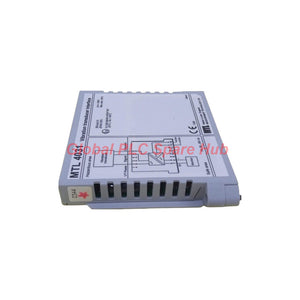
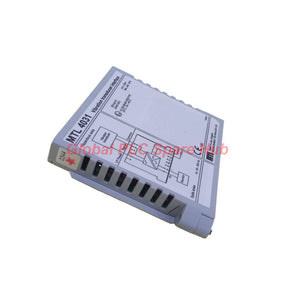
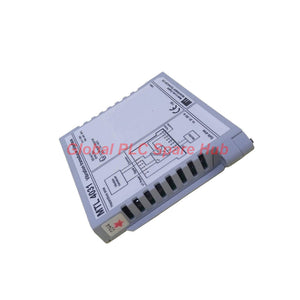
MTL4031 MTL Vibration Sensor Interface for Hazardous Areas
Manufacturer: MTL
Product No.: MTL4031
Condition: In stock
Product Type: Sensor Interface
Product Origin: USA
Payment: T/T, Western Union
Weight: 200g
Shipping port: Xiamen
Warranty: 12 months
Estimate delivery times: 12-26 days (International), 3-6 days (United States).
Return within 30 days of purchase. Duties & taxes are non-refundable.
Guaranteed Safe Checkout
MTL4031 Vibration Sensor Interface – Product Overview
The MTL4031 is a single-channel interface for vibration monitoring systems in rotating machinery applications. It connects hazardous-area vibration sensors to monitoring equipment in a safe-area installation.
The interface supports 3-wire eddy-current probes and high-frequency accelerometers. It transfers vibration signals while maintaining specified electrical isolation between input, power, and output circuits.
Engineers can use the MTL4031 in machinery protection systems that monitor vibration behavior, identify abnormal trends, and support maintenance decisions.
Technical Specifications
| Brand | MTL |
| Model | MTL4031 |
| Product Type | Vibration sensor interface |
| Channel Configuration | Single channel |
| Compatible Sensors | 3-wire eddy-current probes and high-frequency accelerometers |
| Signal Input Range | -20 V to -0.5 V |
| Input Impedance | 10 kΩ, -1% to +2% |
| Output Impedance | Less than 20 Ω |
| DC Transfer Accuracy | Within ±100 mV at 20°C |
| AC Transfer Accuracy | 0 Hz–1 kHz: ±1%; 1–10 kHz: -5% to +1%; 10–20 kHz: -10% to +1% |
| Typical Voltage Bandwidth | -3 dB at 43 kHz |
| Phase Delay | Less than 14 μs |
| Temperature Coefficient | 50 ppm/°C from 10°C to 65°C; 100 ppm/°C from -20°C to 10°C |
| Power Supply | 20–35 V DC operating points specified in the power consumption data |
| Power Consumption | 80 mA at 24 V DC, 88 mA at 20 V DC, and 63 mA at 35 V DC with a 22 mA transducer load |
| Power Dissipation | Less than 1.7 W |
| Electrical Isolation | 250 V AC between input, power, and output circuits |
| Status Indicator | Green LED for power indication |
| Hazardous-Area Suitability | Zone 0, IIC, T4–T6 when suitably certified; Division 1, Group A |
Signal Performance and Measurement Characteristics
- Signal transfer: The interface transfers sensor signals within its specified input range.
- Frequency response: The typical -3 dB bandwidth reaches 43 kHz.
- Transfer accuracy: The specified AC accuracy varies across three frequency bands.
- Phase performance: The phase delay remains below 14 μs under the specified conditions.
- Temperature stability: The temperature coefficient changes across the specified temperature intervals.
- Signal linearity and resolution: The supplied specifications do not state numerical values for either parameter.
- Sensor sensitivity: The supplied specifications do not provide a sensitivity rating. Confirm the sensor's calibration and output characteristics before commissioning.
- Interference resistance: The specifications do not state an EMC immunity rating. Verify the installation's grounding, shielding, and electromagnetic compatibility requirements.
Terminal Functions and Wiring Reference
| Terminal | Function |
| 2 | Supply to hazardous area |
| 5 | Signal input |
| 6 | Common (0 V) |
| 7 | Signal (0 V) |
| 8 | Signal output, negative |
| 13 | Supply negative |
| 14 | Supply positive |
Wiring note: Follow the manufacturer's terminal diagram and installation instructions. Confirm the signal polarity, supply connections, and grounding arrangements before applying power.
Hazardous-Area Safety and Electrical Parameters
The MTL4031 supports interfaces with sensors located in designated hazardous areas when the complete installation meets applicable requirements.
- Terminals 2 to 6: Specified safety parameters are 26.6 V, 94 mA, and 0.66 Ω.
- Terminals 5 to 6: The specified non-energy-storing apparatus parameters are ≤1.2 V, ≤0.1 A, ≤20 μJ, and ≤25 mW.
- Isolation: The unit provides 250 V AC isolation between input, power, and output circuits.
- Certification: Confirm the applicable certificate, gas group, temperature class, installation conditions, and local regulatory requirements before use.
The available specifications do not identify certificate numbers or specific approval documents. Request the relevant manufacturer documentation before hazardous-area installation.
Installation Guide
- Verify the model: Check the MTL4031 model marking and confirm the required channel configuration.
- Check sensor compatibility: Confirm that the sensor type, signal polarity, and electrical characteristics match the interface requirements.
- Review hazardous-area requirements: Verify the sensor certification, safety parameters, and installation drawings.
- Complete the wiring: Connect the sensor input, output, and power supply according to the approved wiring diagram.
- Inspect the installation: Check terminal tightness, cable condition, shielding, and grounding arrangements.
- Apply power: Confirm that the green power LED operates as expected.
- Verify signal transfer: Compare the sensor signal with the receiving monitor's indicated value.
Always isolate power and follow site safety procedures before changing wiring. Do not use the LED alone to confirm correct signal transmission.
Commissioning and Maintenance
- Baseline verification: Record the sensor output and corresponding monitor reading during initial commissioning.
- Signal checks: Compare input and output measurements against the specified transfer accuracy.
- Power checks: Verify supply voltage and current against the installation requirements.
- Connection inspection: Look for loose terminals, damaged conductors, and deteriorated cable shielding.
- Trend comparison: Compare vibration readings with established operating baselines and independent measurements.
- Fault isolation: Check the sensor, interface, wiring, power supply, and monitoring channel separately.
Global PLC Spare HUB's Insight
In rotating machinery monitoring, an abnormal reading does not automatically indicate a failed vibration sensor. Engineers should verify the complete signal path before replacing components.
Field example: A compressor monitoring channel may show an unexpected vibration change after maintenance. First, inspect the sensor cable and terminal polarity. Next, verify the interface supply and compare the transmitted signal with an independent measurement. Finally, inspect the sensor mounting and monitor configuration. This sequence helps distinguish wiring faults from sensor or machinery problems.
Diagnostic value: The MTL4031 provides an interface point for systematic signal-path checks. It does not independently identify bearing damage, shaft misalignment, or rotor imbalance. Engineers must interpret vibration data alongside machinery operating conditions and monitoring-system diagnostics.
Compatibility and Application Scenarios
- Sensor compatibility: Supports 3-wire eddy-current probes and high-frequency accelerometers, subject to electrical compatibility.
- Monitoring equipment: Suitable for vibration monitoring equipment that accepts the interface's signal range and output characteristics.
- Rotating machinery: Applicable to monitoring arrangements for compressors, pumps, turbines, and other rotating equipment when the sensor and monitoring design support the measurement.
- Maintenance systems: Helps engineers investigate signal transmission issues and verify measurement-channel performance.
Confirm the exact sensor model, wiring arrangement, measurement type, and monitor input requirements before selecting a replacement. The available specifications do not establish universal compatibility with every monitoring platform.
Packaging, Shipping, and Warranty
- Product: MTL4031 vibration sensor interface.
- Packaging: Protective packaging for transport. Confirm included accessories and documentation with the supplier before ordering.
- Dispatch: Ships within 24–48 hours, subject to stock confirmation and order processing.
- Shipping methods: FedEx, UPS, and DHL.
- Warranty: 12-month warranty, subject to the seller's written warranty terms.
- Order verification: Provide the complete model number and required quantity when requesting a quotation.
Frequently Asked Questions
Q1: How can engineers determine whether the MTL4031 or the sensor causes an abnormal reading?
Answer: Start by checking the supply voltage, wiring polarity, and terminal condition. Compare the input and output signals with suitable test equipment. Then inspect the sensor mounting and cable integrity. Follow approved hazardous-area procedures during every test.
Q2: Can the MTL4031 connect directly to any PLC analog input?
Answer: Not necessarily. Verify the output signal characteristics and the PLC input's voltage range, impedance, grounding, and measurement requirements. The supplied specifications do not define a universal PLC interface or a standard 4–20 mA output.
Q3: What should engineers check when replacing an existing vibration interface?
Answer: Compare the original part number, terminal assignments, sensor type, signal range, isolation, and hazardous-area approval. Also verify the receiving monitor's input requirements. Matching the connector or channel count alone does not guarantee functional compatibility.
Q4: Does the 43 kHz bandwidth guarantee accurate measurements at every frequency?
Answer: No. The -3 dB bandwidth represents the typical frequency response limit, not a uniform accuracy specification. Check the stated accuracy for each frequency band and assess phase delay when evaluating dynamic vibration signals.
Q5: What information should buyers provide when requesting an MTL4031 quotation?
Answer: Provide the complete model number, required quantity, sensor type, destination country, and delivery requirements. Include the existing system model when ordering a replacement. Request confirmation of stock, packaging, applicable approvals, warranty terms, and dispatch timing before payment.

Tags
Q: Are these parts 100% original and new?
A: Yes. Every component is guaranteed to be 100% original, brand-new, and factory-sealed. We also provide a 12-month comprehensive warranty for your peace of mind.
Q: How fast is the shipping to my country?
A: For in-stock items, we offer same-day dispatch. International express shipping (DHL/FedEx/UPS) typically delivers within 3–5 business days worldwide.
Q: Can I get a formal quotation with shipping costs?
A: Absolutely. Our sales team is ready to provide a detailed Proforma Invoice (PI) including the most competitive shipping rates for your location.
Q: Do you offer discounts for bulk orders?
A: We provide volume-based pricing for large projects or multiple-item orders. Please contact us to get our Best Price Guarantee.
12-Month Comprehensive Warranty
Every part supplied by Global PLC Spare Hub is covered by a 12-month warranty from the date of invoice.
- Coverage: Functional defects and hardware failures under normal operating conditions.
- Commitment: We provide immediate repair, replacement, or a full refund for any verified defective components to minimize your operational downtime.
Returns & Exchange Policy
We offer a 30-day return policy to ensure you receive the exact part your system requires.
- Eligibility: Returns are accepted for uninstalled items in their original, factory-sealed packaging.
- RMA Process: Please contact our support team to obtain a Return Merchandise Authorization (RMA) number before shipping.
- Fast Processing: Refunds or exchanges are processed within 3–5 business days after the returned item passes our technical inspection.
Need Technical Assistance?Not sure if this part is compatible with your system? [Consult our Engineers] before purchasing to ensure 100% compatibility.
People Also Bought


