


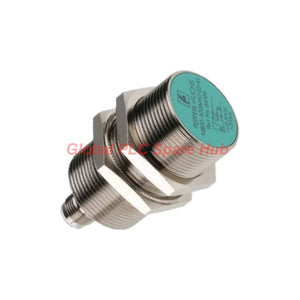

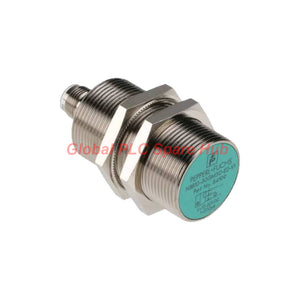
NBB10-30GM50-E2 Pepperl+Fuchs 10mm Flush-Mount Proximity Switch
Manufacturer: Pepperl+Fuchs
Product No.: NBB10-30GM50-E2
Condition: متوفر بالمخزون
Product Type: Proximity Switch
Product Origin: DE
Payment: T/T, Western Union
Weight: 200g
Shipping port: Xiamen
Warranty: 12 months
تقدير أوقات التسليم: 12-26 يومًا (دوليًا)، 3-6 أيام (الولايات المتحدة).
يجب الإرجاع خلال 30 يومًا من الشراء. الرسوم والضرائب غير قابلة للاسترداد.
دفع آمن ومضمون
Product Overview | Inductive Proximity Detection
NBB10-30GM50-E2 is a 10 mm inductive proximity sensor from Pepperl+Fuchs. It detects metallic targets without physical contact and provides a reliable switching signal for industrial automation systems.
This sensor features a flush-mount sensing design, a normally open switching function, and a three-wire PNP output. Its 10–30 V DC operating range supports common industrial control circuits.
The nickel-plated brass housing provides mechanical protection for industrial installations. An IP67 protection rating supports applications exposed to dust and temporary water immersion under specified test conditions.
The integrated yellow LED provides switching status from all viewing directions. Reverse polarity and pulsing short-circuit protection improve electrical protection during operation.
01 | Product Identification
| Identification | Details |
| Manufacturer | Pepperl+Fuchs |
| Model | NBB10-30GM50-E2 |
| Product Family | NBB Inductive Proximity Sensors |
| Product Type | Inductive Proximity Switch |
| Detection Principle | Inductive, non-contact metal detection |
| Switching Function | Normally Open (NO) |
| Output Configuration | PNP, three-wire DC |
| Mounting Type | Flush installation |
| Rated Sensing Distance | 10 mm |
02 | Detection Characteristics and Switching Performance
The sensing distance determines the available installation margin between the sensor face and the target. Engineers should distinguish rated operating distance from assured operating distance during mechanical design.
| Detection Parameter | Specification |
| Rated Operating Distance (sn) | 10 mm |
| Assured Operating Distance (sa) | 0–8.1 mm |
| Installation | Flush |
| Switching Frequency | 0–200 Hz |
| Hysteresis | Typically 5% |
| Reduction Factor (Aluminum) | 0.3 |
| Reduction Factor (Copper) | 0.3 |
| Reduction Factor (Stainless Steel 304) | 0.8 |
| Output Polarity | DC |
Engineering Interpretation: The assured operating distance provides a more conservative installation reference than the nominal 10 mm rating. Actual detection distance varies with target material, dimensions, and geometry.
The reduction factors indicate the relative sensing-distance influence of different target materials. Stainless steel 304 provides a higher factor than aluminum or copper under the specified reference conditions.
03 | Electrical Interface and Output Protection
The three-wire PNP output provides a switching signal for compatible PLC digital inputs and industrial control circuits. Verify the input wiring arrangement before commissioning.
| Electrical Parameter | Value |
| Operating Voltage (UB) | 10–30 V DC |
| Operating Current (IL) | 0–200 mA |
| Switching Frequency (f) | 0–200 Hz |
| Voltage Drop (Ud) | ≤ 3 V |
| No-Load Supply Current (I0) | ≤ 20 mA |
| Off-State Current (Ir) | 0–0.5 mA |
| Typical Off-State Current | 0.1 µA at 25°C |
| Reverse Polarity Protection | Protected |
| Short-Circuit Protection | Pulsing protection |
| Switching Indicator | Yellow LED, visible from all directions |
Output Logic: The normally open PNP output switches the positive supply potential to the load when the sensor detects a suitable metallic target. The output returns to its non-switching state when the target leaves the sensing zone.
PLC Wiring Consideration: Connect the brown wire to positive supply, the blue wire to 0 V, and the black wire to the compatible PNP input. Confirm the manufacturer's wiring diagram before energizing the circuit.
04 | Mechanical Construction and Environmental Resistance
The cylindrical housing combines a nickel-plated brass body with a PBT sensing face. This construction supports installation in industrial machinery and automated production equipment.
| Mechanical Parameter | Specification |
| Housing Material | Nickel-plated brass |
| Sensing Face Material | PBT |
| Electrical Connection | Fixed PVC cable |
| Cable Length | 2 m |
| Cable Diameter | 4.6 mm ± 0.2 mm |
| Core Cross-Section | 0.34 mm² |
| Minimum Bending Radius | Greater than 10 × cable diameter |
| Protection Rating | IP67 |
| Ambient Temperature | -25°C to +70°C |
Environmental Considerations: The IP67 enclosure rating supports dust-tight protection and temporary immersion under defined test conditions. Check cable integrity and installation conditions when using the sensor in wet production areas.
05 | Installation and Commissioning Procedure
Proper mechanical positioning and electrical configuration determine switching reliability. Follow these installation checks before integrating the sensor into an operating machine.
- Mounting Position: Install the sensing face flush with the designated mounting surface.
- Detection Gap: Maintain the target within the 0–8.1 mm assured operating distance.
- Target Selection: Account for material-dependent reduction factors when selecting the detection gap.
- Mechanical Fixing: Secure the housing without applying excessive mechanical stress.
- Cable Routing: Maintain a bending radius greater than ten times the cable diameter.
- Power Supply: Verify the 10–30 V DC supply range before connection.
- PLC Input: Confirm PNP compatibility and the receiving channel's switching threshold.
- Functional Test: Move a suitable metal target through the sensing zone and observe the yellow LED.
Commissioning Tip: Test the sensor using the actual workpiece whenever possible. A steel test object may produce different switching distances from aluminum, copper, or stainless steel 304.
06 | Maintenance and Fault Diagnosis
The integrated LED simplifies field checks during commissioning and routine maintenance. Technicians can identify switching activity without connecting additional diagnostic equipment.
| Observed Condition | Recommended Inspection |
| No switching response | Check supply voltage, target distance, and PNP input wiring. |
| Intermittent switching | Inspect target alignment, vibration, and sensing distance. |
| PLC input remains active | Check output wiring and the PLC input configuration. |
| Unexpected detection distance | Verify target material and its reduction factor. |
| Unstable operation | Inspect cable damage, connector-free cable termination, and electrical interference. |
| No LED indication | Check the supply circuit and sensor switching conditions. |
Maintenance Recommendation: Keep the sensing face clean and inspect the cable sheath periodically. Replace damaged wiring promptly to prevent intermittent signals.
Check the actual switching frequency against the machine cycle. The specified maximum frequency is 200 Hz.
07 | Functional Safety and Reliability Data
| Reliability Parameter | Specification |
| MTTFd | 2062 years |
| Mission Time (TM) | 20 years |
| Diagnostic Coverage (DC) | 0% |
Safety Engineering Note: MTTFd describes the component's dangerous failure characteristics under specified assumptions. It does not independently establish a SIL or Performance Level rating for the complete machine safety function.
The stated diagnostic coverage is 0%. Engineers must evaluate the complete safety architecture, diagnostic measures, and applicable standards before using this sensor in a safety-related application.
08 | Standards and Product Approvals
| Compliance Category | Standard or Approval |
| European Standard | EN 60947-5-2:2007 |
| European Amendment | EN 60947-5-2/A1:2012 |
| International Standard | IEC 60947-5-2:2007 |
| International Amendment | IEC 60947-5-2 AMD 1:2012 |
| UL Approval | cULus Listed, General Purpose |
| CSA Approval | cCSAus Listed, General Purpose |
| CCC Approval | Marking not required for products rated ≤36 V |
09 | Automation Applications and System Integration
The NBB10-30GM50-E2 suits industrial applications that require non-contact metallic object detection and DC switching signals.
- Conveyor Systems: Detect workpiece positions and monitor product movement.
- Packaging Machinery: Confirm mechanical positions during automated packaging cycles.
- Assembly Equipment: Detect metal components during automated assembly operations.
- Machine Tools: Monitor movable machine components and positioning points.
- Material Handling: Provide object detection signals for automated handling equipment.
- PLC Control Panels: Supply PNP switching signals to compatible digital input modules.
Integration Compatibility: The three-wire PNP output supports PLC inputs designed for positive-switching DC sensors. Verify the input voltage, current capacity, and common-terminal arrangement before installation.
10 | Engineering Selection Checklist
Use the following criteria when selecting or replacing an inductive proximity switch:
- Sensing Distance: Confirm that 10 mm rated distance meets the mechanical detection requirement.
- Mounting Design: Verify that flush installation matches the available mounting space.
- Output Logic: Confirm normally open PNP operation matches the controller input.
- Supply Voltage: Check that the control circuit operates within 10–30 V DC.
- Target Material: Apply the appropriate reduction factor for the actual workpiece.
- Switching Speed: Ensure the 200 Hz maximum frequency meets the machine cycle.
- Environmental Conditions: Check temperature, moisture exposure, and cable routing requirements.
- Cable Configuration: Confirm that the fixed 2 m PVC cable suits the installation.
For replacement projects, compare the complete part number and electrical output configuration. Similar sensing distances do not guarantee identical wiring or switching logic.
11 | Packaging and Delivery Information
- 1 × Pepperl+Fuchs NBB10-30GM50-E2 inductive proximity sensor.
- Integrated 2 m PVC connection cable.
- Protective packaging for transportation.
- Product identification information, subject to the supplied configuration.
Warranty: 12-month warranty.
Shipping Options: DHL, FedEx, and UPS international delivery.
Product Condition: New and original factory-supplied equipment.
Ordering Note: Confirm the model number and cable configuration before placing an order. Additional mounting accessories are not included unless specified in the quotation.
12 | Technical FAQ and Engineering Selection Advice
Q1: What happens if the detected workpiece uses aluminum instead of steel?
Aluminum has a specified reduction factor of 0.3. Its effective sensing distance can therefore differ significantly from the nominal 10 mm rating. Engineers should verify the actual switching gap using the production workpiece rather than relying solely on the rated distance.
Q2: Can this sensor detect a rotating metal component?
Yes, provided the target repeatedly enters the sensing zone and the switching frequency remains within 200 Hz. Calculate the expected switching frequency from rotational speed and the number of detection events per revolution. Also consider target geometry and the required PLC response time.
Q3: Why can a sensor work correctly during bench testing but fail after machine installation?
Mounting geometry, nearby metal structures, target alignment, and cable routing can change the operating conditions. Verify flush mounting requirements and the surrounding installation space. Test the complete assembly with the actual workpiece before final commissioning.
Q4: Is the yellow LED sufficient for verifying the sensor's output during troubleshooting?
The LED provides a convenient visual indication of switching activity. However, it does not confirm that the PLC receives the correct signal. Measure the output voltage and inspect the controller input status when diagnosing communication between the sensor and PLC.
Q5: What should buyers verify when choosing this model as a replacement for another proximity switch?
Compare the sensing distance, flush mounting design, NO switching logic, PNP output, supply voltage, and cable arrangement. Also check the target material and switching frequency. A sensor with the same nominal sensing distance may still require different PLC wiring or mechanical adjustments.

Tags
س: هل هذه الأجزاء أصلية وجديدة 100%؟
ج: نعم. نضمن أن كل مكون هو أصلي 100%، وجديد تمامًا، ومغلف من المصنع. كما نقدم ضمانًا شاملاً لمدة 12 شهرًا لراحتك.
س: ما مدى سرعة الشحن إلى بلدي؟
ج: بالنسبة للعناصر المتوفرة في المخزون، نقدم إرسالاً في نفس اليوم. وعادةً ما يتم التسليم عبر الشحن السريع الدولي (DHL/FedEx/UPS) في غضون 3-5 أيام عمل في جميع أنحاء العالم.
س: هل يمكنني الحصول على عرض أسعار رسمي يشمل تكاليف الشحن؟
ج: بالتأكيد. فريق المبيعات لدينا مستعد لتقديم فاتورة مبدئية (PI) مفصلة تتضمن أسعار الشحن الأكثر تنافسية لموقعك.
س: هل تقدمون خصومات للطلبات الكبيرة؟
ج: نقدم أسعارًا تعتمد على الحجم للمشاريع الكبيرة أو طلبات العناصر المتعددة. يرجى الاتصال بنا للحصول على ضمان أفضل الأسعار لدينا.
ضمان شامل لمدة 12 شهرًا
كل جزء توفره Global PLC Spare Hub مشمول بـ ضمان لمدة 12 شهرًا من تاريخ الفاتورة.
- التغطية: عيوب وظيفية وأعطال في الأجهزة في ظل ظروف التشغيل العادية.
- التزامنا: نقدم إصلاحًا فوريًا أو استبدالًا أو استردادًا كاملاً لأي مكونات معيبة تم التحقق منها لتقليل وقت التوقف التشغيلي لديك.
سياسة الإرجاع والاستبدال
نقدم سياسة إرجاع لمدة 30 يومًا لضمان حصولك على الجزء الدقيق الذي يتطلبه نظامك.
- الأهلية: تُقبل المرتجعات للعناصر غير المركبة في تغليفها الأصلي والمحكم الإغلاق من المصنع.
- عملية RMA: يرجى الاتصال بفريق الدعم لدينا للحصول على رقم ترخيص إرجاع البضائع (RMA) قبل الشحن.
- معالجة سريعة: تتم معالجة المبالغ المستردة أو الاستبدالات في غضون 3-5 أيام عمل بعد أن يجتاز العنصر المرتجع فحصنا الفني.
هل تحتاج إلى مساعدة فنية؟لست متأكدًا مما إذا كان هذا الجزء متوافقًا مع نظامك؟ [استشر مهندسينا] قبل الشراء لضمان التوافق بنسبة 100%.
اشترى الناس أيضًا


