


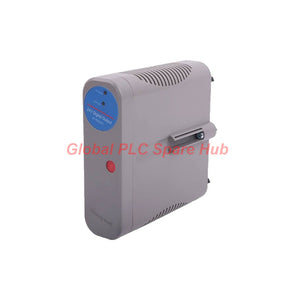
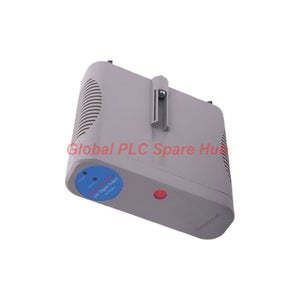
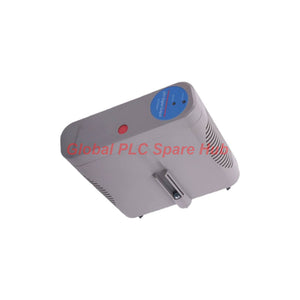
8C-PAIH54 Honeywell Analog Input Module | C300 Series HART Interface
Manufacturer: Honeywell
Product No.: 8C-PAIH54
Condition: In stock
Product Type: Analog Input Module
Product Origin: USA
Payment: T/T, Western Union
Weight: 500g
Shipping port: Xiamen
Warranty: 12 months
Estimate delivery times: 12-26 days (International), 3-6 days (United States).
Return within 30 days of purchase. Duties & taxes are non-refundable.
Guaranteed Safe Checkout
Honeywell 8C-PAIH54 | High-Density Analog Signal Acquisition
The Honeywell 8C-PAIH54 is a 16-channel analog input module designed for industrial process monitoring and control applications. It acquires voltage and current signals through compatible IOTA configurations.
Each module supports single-ended or differential input arrangements. Engineers can select the required wiring architecture through the corresponding IOTA configuration.
The module combines 16-bit analog-to-digital conversion, HART capability, and a 50 ms input scan rate. Its measurement architecture supports 1–5 V and 4–20 mA signals.
For process engineers, the key advantage is flexible signal acquisition across multiple field instruments. Extensive self-diagnostics and optional redundancy also support system availability and maintenance planning.
01 | Product Identity and System Architecture
| Manufacturer | Honeywell |
| Model Number | 8C-PAIH54 |
| Product Series | ControlEdge / C300 I/O Platform – verify system generation against the installed IOTA documentation |
| Product Type | Analog Input Module |
| Signal Classification | Analog Input |
| Input Channels | 16 |
| Input Architecture | Single-Ended or Differential |
| Conversion Resolution | 16 Bits |
| Communication Capability | HART-Capable |
| Redundancy | Optional |
| Hot Removal and Insertion | Supported |
02 | Input Signal Configuration
The 8C-PAIH54 handles voltage and current signals from compatible field transmitters. Its input architecture supports two measurement connection methods.
| Input Signal | Specified Range |
| Voltage | 1–5 V |
| Current | 4–20 mA through 250 Ω |
| Input Channels | 16 |
| Single-Ended Configuration | All 16 channels |
| Differential Configuration | All 16 channels |
| Maximum Input Voltage | ±30 V relative to common, without damage |
Single-Ended Wiring: This arrangement references each signal to the designated common connection. It suits installations with compatible grounding and reference arrangements.
Differential Wiring: This arrangement measures the voltage difference between signal terminals. It helps manage common-mode interference when the field wiring and grounding design support differential measurement.
Current Input Engineering Note: The specified 4–20 mA interface uses a 250 Ω resistance. Confirm the correct IOTA configuration before connecting current-loop instruments.
03 | Conversion Accuracy and Acquisition Performance
Signal conversion performance directly affects process indication, control calculations, and alarm thresholds. The module uses a 16-bit A/D converter for analog signal acquisition.
| A/D Resolution | 16 Bits |
| Input Scan Rate | 50 ms |
| Normal-Mode Filter | Single-Pole RC |
| Filter Response | -3 dB at 6.5 Hz |
| Accuracy at 23.5 ± 2°C | ±0.075% of Full Scale |
| Accuracy from 0 to 60°C | ±0.15% of Full Scale |
| Normal-Mode Rejection | 19 dB at 60 Hz |
| Channel-to-Channel Crosstalk | -60 dB, DC to 60 Hz |
Measurement Resolution: The 16-bit converter provides fine digital representation of the configured analog input range. Actual measurement performance also depends on module accuracy, signal conditioning, and field wiring.
Filter Characteristics: The single-pole RC filter provides a -3 dB response at 6.5 Hz. This response helps attenuate unwanted high-frequency signal components.
Scan Performance: The specified 50 ms input scan rate supports process monitoring. Engineers should evaluate the complete control-system update cycle when measuring fast-changing signals.
04 | Electrical Ratings and Environmental Limits
| Voltage Rating | 24 V DC |
| Module Current Rating | 310 mA |
| Operating Temperature | 0 to +60°C |
| Storage Temperature | -40 to +85°C |
| Maximum Input Voltage | ±30 V relative to common, without damage |
| Power-Up and Maintenance | Removal and insertion under power supported |
Cabinet Design Consideration: Maintain the specified operating temperature around the installed module. Check cabinet ventilation and adjacent equipment heat dissipation.
The ±30 V input limit represents a stated no-damage voltage. It does not represent the normal measurement range. Use only the specified 1–5 V or 4–20 mA input configuration.
05 | HART Communication and Diagnostic Capabilities
The module supports HART-capable field instrumentation. This capability helps integrate compatible smart transmitters into process automation architectures.
- HART Support: Supports compatible HART field-device applications.
- Self-Diagnostics: Provides extensive internal diagnostic functions.
- Redundancy: Supports optional redundant system arrangements.
- Hot-Swap Capability: Supports module removal and insertion under power.
- Signal Monitoring: Acquires analog process variables across 16 channels.
Important Limitation: The supplied specification states no open-wire detection. Do not assume the module automatically identifies every broken field signal conductor.
HART integration also depends on the system architecture, IOTA configuration, field wiring, and host-system support. Verify the required communication functions before engineering the installation.
06 | IOTA Configuration and Installation Guidance
The module supports either single-ended or differential input operation through the corresponding IOTA configuration. Confirm the correct hardware arrangement before wiring field instruments.
Installation Sequence
- Step 1 – Verify Hardware: Confirm the module designation and compatible IOTA assembly.
- Step 2 – Check Signal Type: Identify whether each field instrument provides 1–5 V or 4–20 mA.
- Step 3 – Select Wiring Architecture: Confirm single-ended or differential input requirements.
- Step 4 – Verify Current Input: Confirm the specified 250 Ω current-input arrangement.
- Step 5 – Check Power: Verify the 24 V DC system rating and module current budget.
- Step 6 – Install Module: Follow the manufacturer's IOTA and module installation instructions.
- Step 7 – Configure Channels: Set the correct input type and engineering scaling in the control system.
- Step 8 – Commission Signals: Compare known input values with displayed process readings.
Hot-Swap Precaution: The specification supports removal and insertion under power. Follow the system's approved maintenance procedure and verify the effect on redundancy, channel availability, and process control before removing a module.
07 | Commissioning and Maintenance Recommendations
Correct commissioning requires more than checking whether the module appears online. Engineers should verify the complete measurement path.
| Inspection Item | Recommended Engineering Check |
| Input Type | Confirm voltage or current configuration. |
| IOTA Compatibility | Verify the single-ended or differential hardware arrangement. |
| Current Input | Check the 250 Ω resistance arrangement. |
| Channel Scaling | Compare configured ranges with transmitter output ranges. |
| Measurement Accuracy | Use a calibrated signal source for verification. |
| Signal Stability | Inspect shielding, grounding, and cable routing. |
| HART Communication | Verify host-system and field-device compatibility. |
| Redundancy | Check system configuration and switchover behavior. |
Practical Troubleshooting Advice:
- Check the field transmitter output before replacing the input module.
- Verify the input wiring method when readings show unexpected offsets.
- Inspect the current-input resistance when 4–20 mA values appear incorrect.
- Compare channel readings to identify possible wiring interference.
- Check control-system scaling before adjusting field transmitter settings.
- Review diagnostic information before performing a module replacement.
08 | System Compatibility and Replacement Selection
The Honeywell 8C-PAIH54 is intended for compatible Honeywell I/O architectures. Its installation depends on the correct IOTA, system generation, and controller configuration.
Verify These Items Before Ordering:
- Module Identity: Match the complete 8C-PAIH54 part number.
- IOTA Type: Confirm compatibility with the installed input termination assembly.
- Input Arrangement: Check single-ended or differential requirements.
- Signal Format: Confirm 1–5 V or 4–20 mA operation.
- HART Requirements: Verify the required smart-instrument communication functions.
- System Redundancy: Confirm the required redundant hardware arrangement.
- Power Budget: Check the 310 mA module current rating.
- Firmware and Configuration: Verify compatibility with the installed controller and I/O software.
Replacement Engineering Note: Similar Honeywell analog input modules may use different IOTAs, channel configurations, or communication capabilities. Never approve a substitute based only on channel count.
09 | Packaging and Order Information
- 1 × Honeywell 8C-PAIH54 Analog Input Module.
- Protective packaging for transportation.
- Product model identification and verification.
- 12-month warranty.
- Worldwide shipping support through DHL, FedEx, or UPS.
Confirm IOTA and accessory requirements before ordering. Contact our sales team for stock status, delivery estimates, and technical compatibility checks.
10 | Frequently Asked Questions
Q1: Why might two channels show different readings when they receive the same transmitter signal?
First, compare the input configuration and scaling of both channels. Check the wiring method, common reference, and termination quality. Also consider channel-to-channel crosstalk and field cable interference. A calibrated signal source helps separate module measurement errors from external wiring problems.
Q2: Does 16-bit resolution mean the module always provides 16-bit measurement accuracy?
No. Resolution describes the digital conversion granularity. Accuracy describes the difference between the measured and actual input values. The specified full-scale accuracy remains ±0.075% under reference conditions and ±0.15% across the 0–60°C operating range.
Q3: Can this module directly detect a broken 4–20 mA transmitter cable?
The supplied specifications explicitly state no open-wire detection. Therefore, engineers should not rely on this module alone for broken-loop identification. Consider transmitter diagnostics, external monitoring, or control-system logic where the application requires cable fault detection.
Q4: What causes unstable analog readings when installing the module in a cabinet with variable-frequency drives?
Electromagnetic coupling can affect low-level analog signals. Review cable separation, shielding, grounding, and routing near drive outputs. Differential wiring may help reduce common-mode interference when the IOTA and installation support this arrangement. Also check the signal source and cabinet grounding.
Q5: What should engineers verify before using the optional redundancy function?
Confirm the complete redundant I/O architecture, including the required IOTAs, controller configuration, and system support. Check the manufacturer's redundancy rules for the specific hardware revision. Test switchover behavior under an approved maintenance procedure before placing the system into critical service.
11 | Why Specify Honeywell 8C-PAIH54?
- 16-Channel Density: Acquires multiple process signals within one module.
- Flexible Input Architecture: Supports single-ended and differential configurations.
- 16-Bit Conversion: Provides fine-grained digital signal representation.
- HART Capability: Supports compatible smart field instrumentation.
- Fast Acquisition: Provides a specified 50 ms input scan rate.
- Maintenance Flexibility: Supports removal and insertion under power.
- System Availability: Offers optional redundancy and extensive self-diagnostics.
The Honeywell 8C-PAIH54 provides flexible analog signal acquisition for industrial process control. Its 16-channel architecture, HART capability, and configurable input arrangement support demanding measurement applications.
Contact us today for a quotation, technical verification, and delivery information for the Honeywell 8C-PAIH54.
Tags
Q: Are these parts 100% original and new?
A: Yes. Every component is guaranteed to be 100% original, brand-new, and factory-sealed. We also provide a 12-month comprehensive warranty for your peace of mind.
Q: How fast is the shipping to my country?
A: For in-stock items, we offer same-day dispatch. International express shipping (DHL/FedEx/UPS) typically delivers within 3–5 business days worldwide.
Q: Can I get a formal quotation with shipping costs?
A: Absolutely. Our sales team is ready to provide a detailed Proforma Invoice (PI) including the most competitive shipping rates for your location.
Q: Do you offer discounts for bulk orders?
A: We provide volume-based pricing for large projects or multiple-item orders. Please contact us to get our Best Price Guarantee.
12-Month Comprehensive Warranty
Every part supplied by Global PLC Spare Hub is covered by a 12-month warranty from the date of invoice.
- Coverage: Functional defects and hardware failures under normal operating conditions.
- Commitment: We provide immediate repair, replacement, or a full refund for any verified defective components to minimize your operational downtime.
Returns & Exchange Policy
We offer a 30-day return policy to ensure you receive the exact part your system requires.
- Eligibility: Returns are accepted for uninstalled items in their original, factory-sealed packaging.
- RMA Process: Please contact our support team to obtain a Return Merchandise Authorization (RMA) number before shipping.
- Fast Processing: Refunds or exchanges are processed within 3–5 business days after the returned item passes our technical inspection.
Need Technical Assistance?Not sure if this part is compatible with your system? [Consult our Engineers] before purchasing to ensure 100% compatibility.
People Also Bought


